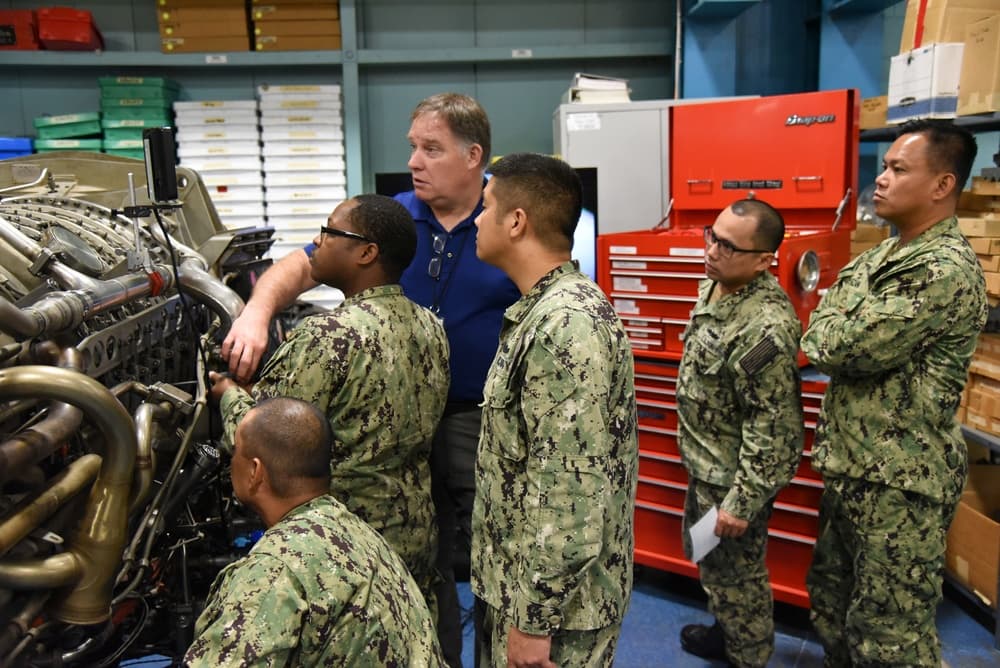
Gas Turbine Systems Technician
Gas Turbine Systems Technicians maintain and repair gas turbine engines, generators, and propulsion control systems on surface combatants.
Overall
Quick Stats
Security Clearance
None
This rate does not require a security clearance.
ASVAB Requirements
Who This Is Best For
Best for individuals fascinated by turbine technology and complex mechanical/electrical systems who want strong civilian transferability to the energy sector. Power plant operations, natural gas facilities, and energy industry careers offer above-average salary potential for former GS sailors.
+Pros
- ✓Strong civilian career transition
–Cons
- ✗Significant sea duty
Real Opinions
+Positive
“Engineering rates get a bad rap but the job security and trade skills are legit. I went straight into a union job.”
“Gas Turbine Systems Technicians call themselves "The Elite of the Fleet." Few engines in the world are as powerful as a gas-turbine system on a Navy warship, and the strongest engines need Sailors with the strength and skills to support them. There is real pride in keeping a warship moving.”
“GS rates provide tremendous technical depth and career potential. Navy COOL funds civilian certifications like Certified Marine Technician and Gas Turbine Specialist credentials. A good GS will never be short of civilian career opportunities in power generation or maritime propulsion.”
–Critical & Mixed
“The job is hot, dirty, long hours, but you get out of it what you put into it.”
“Engineering spaces are HOT, with over a hundred degrees being normal in some areas.”
“Underway life in engineering is hot, loud, and exhausting. You will stand watch in some miserable conditions.”
Recruiter vs Reality
What the recruiter says vs. what it's actually like.
🫡 Recruiter says
“Engineering rates are always in demand and you will learn a valuable trade!”
💀 Reality
Source: MyNavyRates researchThe trade skills are real but underway life in engineering spaces is hot, loud, and physically demanding. Watch rotations can be exhausting, especially on older ships.
🫡 Recruiter says
“GS has great engineering skills for civilian power plants.”
💀 Reality
Source: sailor forumsGS experience with gas turbines transfers to civilian power generation, but you need additional certifications. Many GS transition to power plant operator or marine engineering roles.
🫡 Recruiter says
“Gas Turbine Systems Technicians keep the ship moving.”
💀 Reality
Source: veteran feedbackGS maintains the gas turbine engines that power surface combatants. The engine room is hot, loud, and cramped. You will become intimately familiar with LM2500 turbine engines.
🫡 Recruiter says
“Gas Turbine Technicians maintain the engines that power the Navy's warships.”
💀 Reality
You will be designated GSE (electrical) or GSM (mechanical) after A School. You do not pick. Either way, expect life below decks in hot, loud main engineering spaces on destroyers and cruisers.
🫡 Recruiter says
“GS rates serve on the most capable surface combatants in the fleet.”
💀 Reality
DDGs and CGs deploy constantly. High operational tempo means more time at sea, more drills, and less time with family. The capable ships are the busy ships.
🫡 Recruiter says
“Working with gas turbines is clean, modern engineering.”
💀 Reality
The engine room is still over 100 degrees when engines are online. You still deal with lube oil, fuel, and hydraulic fluid. Hearing protection is mandatory every time you enter the space.
🫡 Recruiter says
“GS rates are well-respected in the engineering department.”
💀 Reality
Respect is earned through qualifying watchstations, not from your rate alone. The interrate rivalries between GSMs, GSEs, EMs, and MMs are real and mostly good-natured.
🫡 Recruiter says
“Gas turbine experience is valuable in the civilian energy sector.”
💀 Reality
Civilian power plants run different turbine models and control systems. Plan to use GI Bill or Navy COOL for additional certifications. The experience helps in interviews but rarely qualifies you directly.
🫡 Recruiter says
“The GS community takes care of its own — strong mentorship and training.”
💀 Reality
Your experience depends entirely on your chain of command. Some ships have outstanding engineering leadership. Others have toxic chiefs who treat the engine room like a punishment.
Training Pipeline — Total ~19 weeks (4 months)
Ship Date Calculator
Enter your MEPS ship date to see when you'll complete each stage.
Promotion SpeedEarn higher pay fasterSlowManning 88% (balanced)
| Cycle (Year) | Eligible | Selected | Promotion % |
|---|---|---|---|
| E-4252-Spring(2024) | 203 | 51 | 25% |
| E-4252-Fall(2024) | 138 | 101 | 73% |
| E-5252-Spring(2024) | 170 | 56 | 33% |
| E-5252-Fall(2024) | 113 | 11 | 10% |
| E-6252-Spring(2024) | 58 | 15 | 26% |
| E-6252-Fall(2024) | 149 | 27 | 18% |
Bonuses — Click here to see your military pay
Enlistment Bonus
No active bonus for this rate
You May Qualify for a Navy Enlisted Classification (NEC)
Specialties within this rate you can select, some with additional compensation. Each NEC has its own training, bonus potential, and career path.
Primary specialty code for Gas Turbine Systems Technician rating
Advanced specialty code for experienced Gas Turbine Systems Technician personnel
Potential Civilian Post-Navy Outcomes
Gas Turbine Technician
Transferability: 7/10
$55k–$95k
Lifestyle4/10
Ship vs. Shore Split
72% / 28%
Deployment Frequency
High
Physical Demand
medium — indoor
Watch Standing
3-section underway, 4-section in port
In a 4-section rotation, the crew is divided into four teams. Each team stands a 6-hour watch shift, then has 18 hours off before their next watch. In port, you stand 24-hour duty roughly every 4 days — meaning you stay aboard the ship overnight on your duty day.
Watch qualifications vary by command and platform. Expect to qualify within 90 days of reporting.
Common Duty Stations
—
Schools + spouse jobs
—
Avg waitlist for on-base
95
100 = national avg
—
Schools + spouse jobs
—
Avg waitlist for on-base
135
100 = national avg
—
Schools + spouse jobs
—
Avg waitlist for on-base
92
100 = national avg