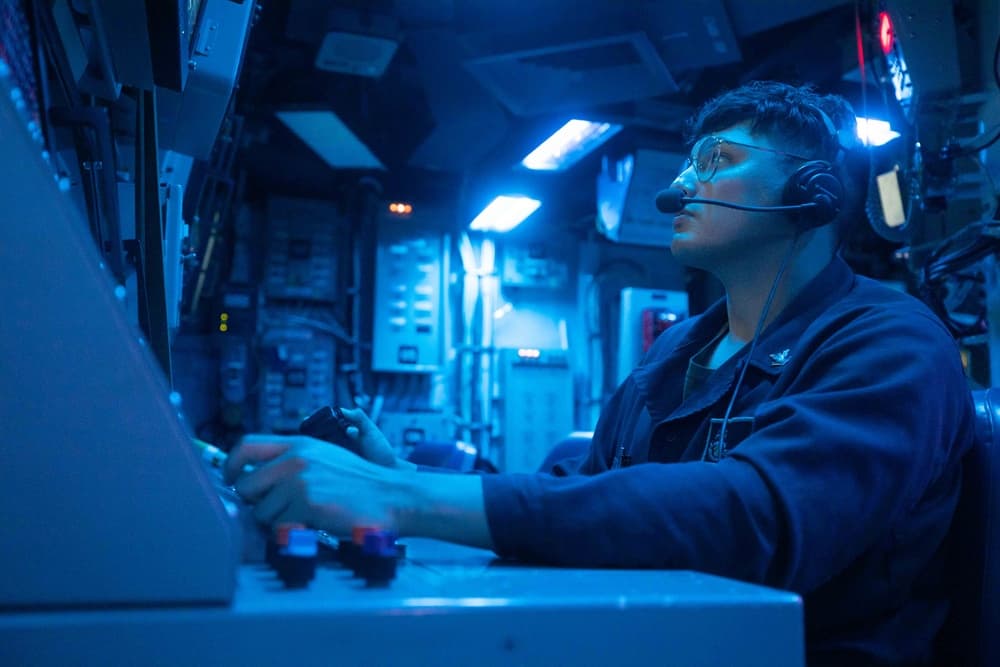
Fire Controlman
Fire Controlmen operate and maintain weapons control systems, including missile and gun fire control systems, radar, and associated computer systems aboard surface combatants.
Overall
Quick Stats
Security Clearance
Secret~$3K–$15K civilian sector value
Requires a National Agency Check with Local Agency Check and Credit Check (NACLC). Processing typically takes 1–3 months and is initiated early in your training pipeline.
ASVAB Requirements
Who This Is Best For
Best for tech-minded individuals who are drawn to the tactical side of electronics — understanding how sensors and weapons integrate into a lethal system. Unique training that translates well to defense contractor and systems engineering roles. Ideal for someone who wants both technical depth and operational excitement.
+Pros
- ✓Active enlistment bonus available
- ✓Strong civilian career transition
–Cons
- ✗Long A-school pipeline
- ✗Significant sea duty
Real Opinions
+Positive
“Fire controlman is one of the best rates in the Navy. Because their A School is so long they instantly get E-4 and so they rate up very quickly.”
“FCs will stand watch and operate the fire control work stations so it is not a heavy lifting job. They learn a variety of skills with electronics, making them very marketable for the civilian world.”
“Fire controlmen work on the coolest weapons systems in the Navy. Aegis experience is highly valued.”
“Defense contractors love hiring FCs. Raytheon, Lockheed, BAE all recruit heavily from this rate.”
“Aegis FCs are heavily recruited by Lockheed and Raytheon. The technical knowledge is very specialized.”
–Critical & Mixed
“Almost exclusively ship-based. If you hate sea duty, this is not your rate.”
“High responsibility during combat or alert states where mistakes can have severe consequences. Fast-paced fault isolation where diagnostics are time-critical creates pressure to repair during limited maintenance windows. Repetitive maintenance tasks and long hours during inspections grind you down.”
“Fire Controlman is one of the best rates in the Navy — they learn a variety of skills with electronics making them very marketable for civilian work. But 31 weeks of A school is a long pipeline, and the job is physically demanding, not just indoor work. Far more hands-on maintenance and troubleshooting than most expect.”
Recruiter vs Reality
What the recruiter says vs. what it's actually like.
🫡 Recruiter says
“The FC rate offers great training and career advancement opportunities!”
💀 Reality
Source: MyNavyRates researchTraining and advancement are available but vary by command and manning. Ask specific questions about sea/shore rotation, typical duty stations, and advancement rates for FC.
🫡 Recruiter says
“FC is a fast-promoting rate.”
💀 Reality
Source: navy dataFC promotion has slowed in recent years as the rate has become more manned. Check the current advancement percentages before assuming fast promotion.
🫡 Recruiter says
“FC guarantees a Secret clearance.”
💀 Reality
Source: sailor forumsTrue, but the clearance alone does not translate to the same civilian value as a TS/SCI. The technical skills in electronics and radar are what really drive civilian marketability.
🫡 Recruiter says
“Fire Controlmen work on cutting-edge missile systems.”
💀 Reality
Source: veteran feedbackFC work is highly technical but involves a lot of troubleshooting with a multimeter and reading technical manuals. The weapons themselves fire rarely outside of exercises.
🫡 Recruiter says
“FCs work on CIWS — the Phalanx close-in weapons system is incredible.”
💀 Reality
CIWS is genuinely impressive when it fires. But your daily reality is running maintenance requirement cards (MRCs), troubleshooting servo motors, replacing circuit cards, and chasing intermittent faults through technical manuals. A CIWS live-fire exercise might happen a few times per deployment. The other 99% of your time is keeping the mount in a ready state through tedious preventive maintenance.
🫡 Recruiter says
“FC is one of the best rates for civilian defense contractor jobs.”
💀 Reality
This one is actually mostly true — Raytheon, Lockheed, and BAE hire former FCs regularly, especially for CIWS, RAM, and Mk 160 gun fire control work. But the good contractor jobs typically go to E-6+ with 10+ years of specific system experience. A first-term FC with one deployment has some transferable electronics skills but should not expect a six-figure contractor offer on day one.
Training Pipeline — Total ~48 weeks (11 months)
Ship Date Calculator
Enter your MEPS ship date to see when you'll complete each stage.
Promotion SpeedEarn higher pay fasterAverageManning 87%
| Cycle (Year) | Eligible | Selected | Promotion % |
|---|---|---|---|
| E-4254(2025) | 195 | 130 | 67% |
| E-4253(2024) | 190 | 125 | 66% |
| E-5254(2025) | 210 | 68 | 32% |
| E-5253(2024) | 205 | 64 | 31% |
| E-6254(2025) | 120 | 28 | 23% |
| E-6253(2024) | 115 | 26 | 23% |
Bonuses — Click here to see your military pay
Enlistment Bonus
Bonus by Contract Length
6-Year Contract
$18,000
5-Year Contract
$13,500
4-Year Contract
$9,000
How to Qualify
- Sign a contract for this rate at MEPS — bonus eligibility is locked at the time of contract signing
- Ship to boot camp and successfully complete Recruit Training Command (RTC) at Great Lakes, IL
- Complete A-School and any required follow-on training in the FC pipeline
- Receive your rate assignment and report to your first duty station
- Bonus is typically paid in installments — 50% after completing training, remainder in anniversary payments
Important Details
- •Longer contracts receive higher bonus amounts
- •Bonus amounts are subject to federal income tax withholding (typically 22%)
- •If you fail to complete training or are separated early, you may be required to repay a prorated portion
- •Bonus availability and amounts change frequently based on Navy manning needs — confirm with your recruiter
- •This rate requires a security clearance — failure to obtain clearance may affect bonus eligibility
You May Qualify for a Navy Enlisted Classification (NEC)
Specialties within this rate you can select, some with additional compensation. Each NEC has its own training, bonus potential, and career path.
Advanced weapons system maintenance and operation
Advanced specialty code for experienced Fire Controlman personnel
Potential Civilian Post-Navy Outcomes
Electronics/Radar Technician
Transferability: 7/10
$55k–$90k
Free Certifications & Credentials
Certifications and licenses the Navy will pay for free through Navy COOL and on-the-job training.
PMP
PMI
CompTIA A+
CompTIA
Certified Electronics Technician
ETA International
Lifestyle6/10
Ship vs. Shore Split
70% / 30%
Deployment Frequency
High
Physical Demand
medium — indoor
Watch Standing
3-section in port, 3-section underway
In a 3-section rotation, the crew is divided into three teams. Each team stands an 8-hour watch shift, then has 16 hours off. In port, you stand 24-hour duty roughly every 3 days — one out of every three nights you stay aboard the ship. Underway (when attached to a ship command), the watch schedule runs continuously with shorter rest periods between shifts.
Combat systems watch in CIC; weapons system monitoring 24/7 underway
Common Duty Stations
—
Schools + spouse jobs
—
Avg waitlist for on-base
95
100 = national avg
—
Schools + spouse jobs
—
Avg waitlist for on-base
135
100 = national avg
—
Schools + spouse jobs
—
Avg waitlist for on-base
92
100 = national avg