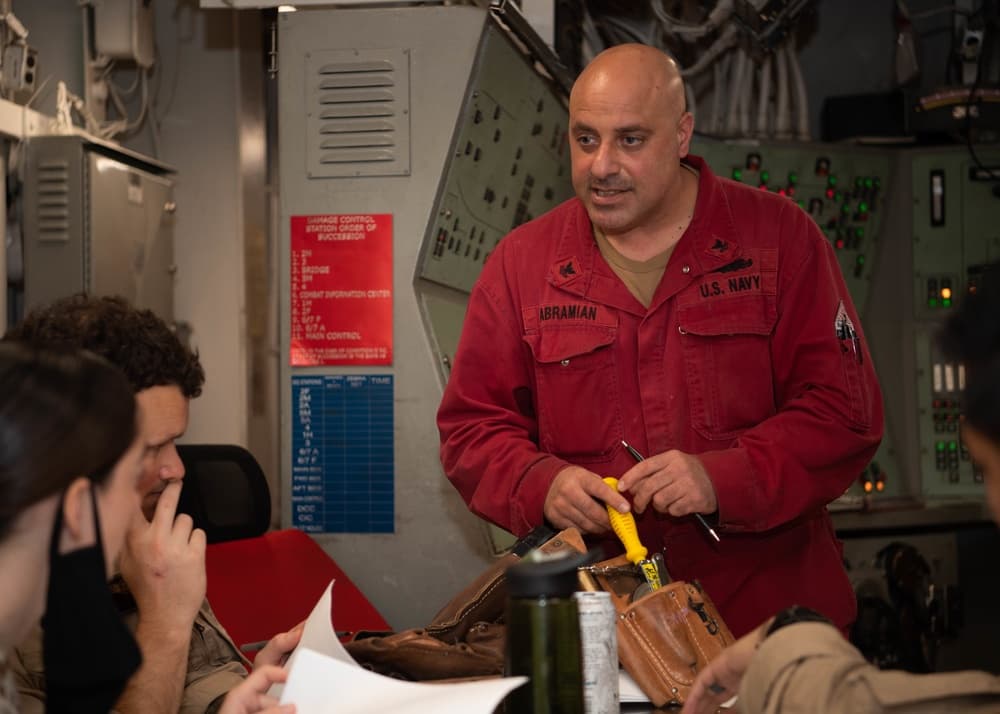
Damage Controlman
Damage Controlmen are responsible for firefighting, damage control, and chemical/biological/radiological defense aboard ships. They maintain firefighting equipment and train the crew in emergency procedures.
Overall
Quick Stats
Security Clearance
None
This rate does not require a security clearance.
ASVAB Requirements
Who This Is Best For
Best for physically fit individuals who stay calm in chaos and run toward danger rather than away from it. If you want skills that transfer directly to civilian fire departments, HAZMAT teams, and emergency management agencies, this rate builds both mental toughness and highly marketable certifications. Not for those who prefer routine — every day is potential crisis response.
+Pros
- ✓Active enlistment bonus available
- ✓Strong civilian career transition
–Cons
- ✗Significant sea duty
Real Opinions
+Positive
“The Navy took an unskilled and unmotivated 18 year old and trained him to be a stellar firefighter, teacher, and leader of men.”
“Damage controlmen are the firefighters of the Navy. When things go wrong, we are the first ones called.”
“HAZMAT and firefighting certs transfer well to civilian fire departments.”
“If you want to be a firefighter after the Navy, DC is the obvious choice. HAZMAT certs alone are worth thousands.”
–Critical & Mixed
“The most maintenance-intensive job in the navy and much more than just being a firefighter. 80-hour work weeks are typical in port.”
“Small community means you know everyone. Tight knit but slow advancement at higher paygrades.”
“80-hour work weeks are typical in port. DC is the most maintenance-intensive job in the Navy and much more than just being a firefighter. One 11-year sailor noted that overall LCPO leadership is so toxic that it outweighs the good. Pay sucks until you make rank, which can take years.”
Recruiter vs Reality
What the recruiter says vs. what it's actually like.
🫡 Recruiter says
“Engineering rates are always in demand and you will learn a valuable trade!”
💀 Reality
Source: MyNavyRates researchThe trade skills are real but underway life in engineering spaces is hot, loud, and physically demanding. Watch rotations can be exhausting, especially on older ships.
🫡 Recruiter says
“DC translates directly to civilian firefighting.”
💀 Reality
Source: veteran feedbackCivilian fire departments require their own academy and EMT certification. Your DC experience helps but does not bypass their requirements. Many DCs go into industrial safety instead.
🫡 Recruiter says
“DC is exciting and action-packed.”
💀 Reality
Source: sailor forumsDC involves a lot of paperwork, tagging out equipment, and conducting drills. The adrenaline moments are rare. You will become very familiar with NSTM chapters and PMS cards.
🫡 Recruiter says
“Damage Controlmen are firefighters at sea.”
💀 Reality
Source: veteran feedbackDC is primarily about maintenance of firefighting equipment, conducting inspections, and managing the ship's damage control program. Actual fires are rare. Most of your time is spent on preventive maintenance.
🫡 Recruiter says
“You'll be trained in CBRN defense — it's like being a HAZMAT specialist.”
💀 Reality
Day-to-day you're inventorying OBA canisters, inspecting fire extinguishers, and chasing overdue PMS checks on AFFF stations. The CBRN gear mostly collects dust between inspections.
🫡 Recruiter says
“DCs are the ship's emergency experts — you'll lead the crew in crisis situations.”
💀 Reality
You will run drills constantly, but most of your "leading" is begging other divisions to send bodies for training and writing up paperwork afterward. 95% of the job is drill coordination, documentation, and DCTT admin work.
🫡 Recruiter says
“DC has great shore duty options — you can work at fire stations on base.”
💀 Reality
Shore billets exist at shipyards and maintenance centers, but they are competitive. Many DCs end up at training commands running the same drills. The base fire department jobs go to civilian GS employees, not DCs.
Training Pipeline — Total ~25 weeks (6 months)
Ship Date Calculator
Enter your MEPS ship date to see when you'll complete each stage.
Promotion SpeedEarn higher pay fasterAverageManning 82% (Undermanned)
| Cycle (Year) | Eligible | Selected | Promotion % |
|---|---|---|---|
| E-4254(2025) | 48 | 33 | 69% |
| E-4253(2024) | 46 | 31 | 67% |
| E-5254(2025) | 42 | 16 | 38% |
| E-5253(2024) | 40 | 14 | 35% |
| E-6254(2025) | 28 | 8 | 29% |
| E-6253(2024) | 26 | 7 | 27% |
Bonuses — Click here to see your military pay
Enlistment Bonus
Bonus by Contract Length
5-Year Contract
$12,000
4-Year Contract
$6,000
How to Qualify
- Sign a contract for this rate at MEPS — bonus eligibility is locked at the time of contract signing
- Ship to boot camp and successfully complete Recruit Training Command (RTC) at Great Lakes, IL
- Complete A-School and any required follow-on training in the DC pipeline
- Receive your rate assignment and report to your first duty station
- Bonus is typically paid in installments — 50% after completing training, remainder in anniversary payments
Important Details
- •Longer contracts receive higher bonus amounts
- •Bonus amounts are subject to federal income tax withholding (typically 22%)
- •If you fail to complete training or are separated early, you may be required to repay a prorated portion
- •Bonus availability and amounts change frequently based on Navy manning needs — confirm with your recruiter
You May Qualify for a Navy Enlisted Classification (NEC)
Specialties within this rate you can select, some with additional compensation. Each NEC has its own training, bonus potential, and career path.
Primary specialty code for Damage Controlman rating
Advanced specialty code for experienced Damage Controlman personnel
Potential Civilian Post-Navy Outcomes
Firefighter
Transferability: 6.5/10
$40k–$70k
Free Certifications & Credentials
Certifications and licenses the Navy will pay for free through Navy COOL and on-the-job training.
Firefighter I/II
IFSAC/ProBoard
HAZMAT Technician
IFSAC
Hazardous Materials Technician
NFPA
OSHA 30-Hour Safety
OSHA
Lifestyle4/10
Ship vs. Shore Split
75% / 25%
Deployment Frequency
High
Physical Demand
high — mixed
Watch Standing
3-section in port, 3-section underway
In a 3-section rotation, the crew is divided into three teams. Each team stands an 8-hour watch shift, then has 16 hours off. In port, you stand 24-hour duty roughly every 3 days — one out of every three nights you stay aboard the ship. Underway (when attached to a ship command), the watch schedule runs continuously with shorter rest periods between shifts.
Roving DC watch; in-port fire party; HAZMAT response team
Common Duty Stations
—
Schools + spouse jobs
—
Avg waitlist for on-base
95
100 = national avg
—
Schools + spouse jobs
—
Avg waitlist for on-base
135
100 = national avg
—
Schools + spouse jobs
—
Avg waitlist for on-base
92
100 = national avg