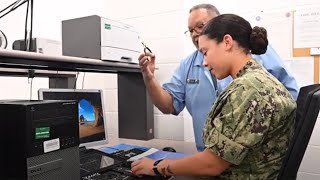
Cryptologic Technician Maintenance
Maintains and repairs cryptologic equipment and systems.
Overall
Quick Stats
Security Clearance
Top Secret / Sensitive Compartmented Information~$15K–$50K civilian sector value
Requires a Single Scope Background Investigation (SSBI), including interviews with references, financial review, and a possible polygraph. The process typically takes 6–12 months and is initiated during your training pipeline.
ASVAB Requirements
Who This Is Best For
Best for skilled electronics troubleshooters who prefer maintenance over analysis and want a top-secret clearance. If you'd rather keep the hardware running than interpret the data it collects, this rate offers the security clearance and technical depth that open doors to high-paying defense contractor jobs.
+Pros
- ✓Strong civilian career transition
–Cons
Real Opinions
+Positive
“It is a small group with a little over 800 sailors total. That keeps demand high for capable, motivated people.”
“Best decision I made was going CTM. The clearance alone is worth it, and the skills transfer directly to six-figure civilian jobs.”
“CTMs are a very small rate with not many people, but that actually works in your favor. You get installation, configuration, diagnosis, and repair experience on state-of-the-art electronic and network systems. The small community means people actually know each other and look out for one another.”
–Critical & Mixed
“Due to lack of CTM opportunities ashore, it is common for apprentice and journeymen CTMs to work out of rate while on shore duty.”
“CTMs are true sailors in that they can, and it is normal for them to, be stationed aboard ships and submarines. The rating card indicates two tours of sea duty before their first shore duty.”
“Be prepared for shore duty boredom and watch rotations. The clearance process is also stressful and takes forever.”
Recruiter vs Reality
What the recruiter says vs. what it's actually like.
🫡 Recruiter says
“You will work with cutting-edge cyber technology and get a top secret clearance!”
💀 Reality
Source: MyNavyRates researchThe clearance is real and valuable, but daily work can involve a lot of routine network maintenance and help-desk tickets. Cutting-edge tech varies widely by command.
🫡 Recruiter says
“CTM has the same clearance as other CTs.”
💀 Reality
Source: sailor forumsTrue, CTM holds TS/SCI, but the daily work is electronics maintenance and troubleshooting, not intelligence analysis. The clearance still has great civilian value for defense contractor jobs.
🫡 Recruiter says
“CTM maintains the systems that other CTs use.”
💀 Reality
Source: veteran feedbackCTM is the maintenance side of the CT community. You fix the hardware and networks rather than doing the signals intelligence work. It is more like an ET focused on SIGINT equipment.
🫡 Recruiter says
“CTM gets the same TS/SCI clearance as all the other CTs.”
💀 Reality
True — the clearance is valuable. But your daily job is electronics maintenance and troubleshooting, not intelligence analysis. You fix the hardware that other CTs use. Think of it as an ET with a Top Secret clearance.
🫡 Recruiter says
“CTM is a small, specialized community.”
💀 Reality
With roughly 800 sailors total, CTM is tiny. Limited billet options, fewer shore duty choices, and everyone knows your reputation. Advancement can fluctuate wildly year to year due to small quota numbers.
🫡 Recruiter says
“CTMs maintain cutting-edge SIGINT and crypto equipment.”
💀 Reality
You also handle EKMS/COMSEC custodian duties — managing encryption keys and classified material accountability. This is meticulous paperwork that has nothing to do with electronics repair but consumes significant time.
🫡 Recruiter says
“CTM has a good sea/shore rotation — about 50/50.”
💀 Reality
Shore billets often put you in out-of-rate work — supporting IT infrastructure or doing general electronics maintenance that any ET could do. Your CT-specific skills may go unused on shore duty.
🫡 Recruiter says
“CTM electronics skills transfer well to civilian defense contractor jobs.”
💀 Reality
The combination of a TS/SCI clearance and electronics maintenance experience is valuable. But the specific SIGINT equipment you maintain has no civilian equivalent. Translate your skills as general electronics troubleshooting with a clearance.
🫡 Recruiter says
“CTM is a good choice if you like electronics but also want intel community access.”
💀 Reality
You get the clearance and the SCIF access but spend your day swapping circuit cards and running cable. If you want to do analysis, pick CTR or IS. If you want to do electronics maintenance, pick ET. CTM sits in between, which can feel like you are neither.
Training Pipeline — Total ~26 weeks (6 months)
Ship Date Calculator
Enter your MEPS ship date to see when you'll complete each stage.
Promotion SpeedEarn higher pay fasterSlowManning 78% (E-5/E-6)
| Cycle (Year) | Eligible | Selected | Promotion % |
|---|---|---|---|
| E-4252-Spring(2024) | 120 | 53 | 44% |
| E-4252-Fall(2024) | 249 | 56 | 22% |
| E-5252-Spring(2024) | 177 | 63 | 36% |
| E-5252-Fall(2024) | 128 | 39 | 30% |
| E-6252-Spring(2024) | 100 | 33 | 33% |
| E-6252-Fall(2024) | 88 | 8 | 9% |
Bonuses — Click here to see your military pay
Enlistment Bonus
No active bonus for this rate
You May Qualify for a Navy Enlisted Classification (NEC)
Specialties within this rate you can select, some with additional compensation. Each NEC has its own training, bonus potential, and career path.
Primary specialty code for Cryptologic Technician Maintenance rating
Advanced specialty code for experienced Cryptologic Technician Maintenance personnel
Potential Civilian Post-Navy Outcomes
Electronics Maintenance Technician
Transferability: 7/10
$48k–$75k
Lifestyle7/10
Ship vs. Shore Split
40% / 60%
Deployment Frequency
Moderate
Physical Demand
low — indoor
Watch Standing
4-section watch rotation (8 on / 16 off)
In a 4-section rotation, the crew is divided into four teams. Each team stands a 6-hour watch shift, then has 18 hours off before their next watch. In port, you stand 24-hour duty roughly every 4 days — meaning you stay aboard the ship overnight on your duty day.
Watch stations often in climate-controlled spaces. SCIF access may be required for some watches.
Media & Videos
Direct Links (if videos are blocked)