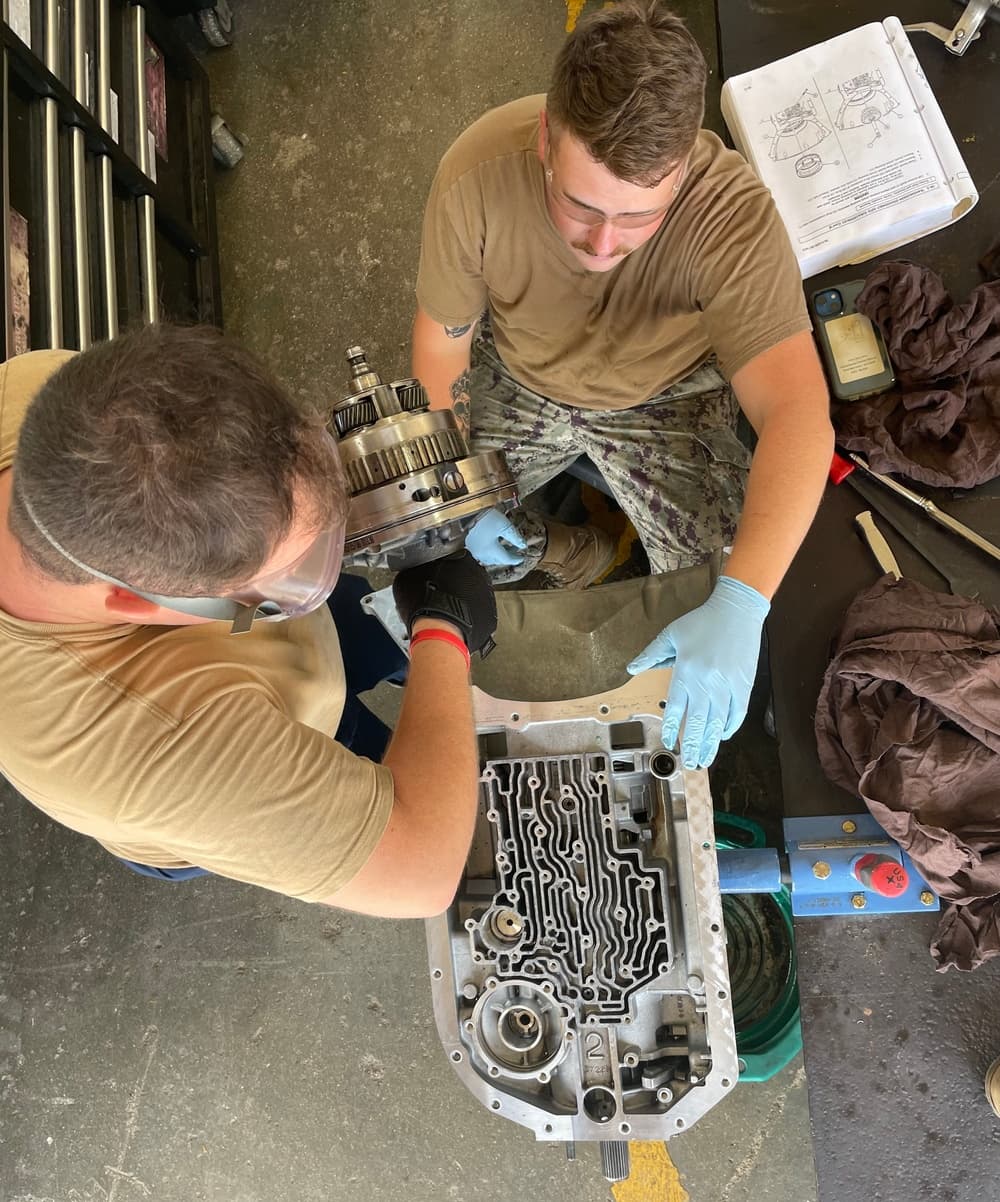
Construction Mechanic
Maintains heavy construction equipment and tactical vehicles for Seabee battalions.
Overall
Quick Stats
Security Clearance
None
This rate does not require a security clearance.
ASVAB Requirements
Who This Is Best For
Best for diesel mechanics and gearheads who love troubleshooting mechanical problems on heavy equipment and tactical vehicles. Transferable skills for heavy equipment, trucking, and fleet maintenance careers make this ideal for someone who wants to wrench on big machines.
+Pros
- ✓Strong civilian career transition
–Cons
Real Opinions
+Positive
“CMs work on everything from bulldozers to humvees. The variety keeps it interesting and the skills are highly transferable.”
“Seabee life is different from fleet Navy. More boots on the ground, less time on ships. If you want to actually build things, this is the community for you.”
“Seabees are the best-kept secret in the Navy. Great deployments, real skills, and you actually build stuff.”
–Critical & Mixed
“You are a mechanic first and a sailor second. The work is dirty and physical but satisfying.”
“Deployments can be to some rough locations. And you are still in the Navy, so expect Navy nonsense on top of the construction work.”
“This rating can be tough if you dislike dirt, noise, or physical work. You're lifting heavy parts, standing for hours, working in awkward positions in environments ranging from indoor garages to deserts and jungles. The biggest long-term risks come from repetitive strain, poor lifting habits, and hearing damage. Deployments and time away from home are especially hard for those with families.”
“As a CM you'll work on everything from backhoes and bulldozers to tactical vehicles, but the advancement is painfully slow. Reaching E-6 takes about 10 years for a construction mechanic. As you gain experience the work becomes more planning-heavy, which some people find less satisfying than turning wrenches. And the 5-year enlistment obligation means you're committed for a long time.”
Recruiter vs Reality
What the recruiter says vs. what it's actually like.
🫡 Recruiter says
“Seabees travel the world building things and have great quality of life!”
💀 Reality
Source: MyNavyRates researchQuality of life is generally good but deployments to austere locations (desert, jungle) are common. You will do real construction but also a lot of maintenance and military duties.
🫡 Recruiter says
“CM leads to a great civilian heavy equipment mechanic career.”
💀 Reality
Source: sailor forumsCM experience with Caterpillar and John Deere equipment transfers directly. Many CMs get hired by construction and mining companies immediately after separation.
🫡 Recruiter says
“Construction Mechanics keep Seabee equipment running.”
💀 Reality
Source: veteran feedbackCM maintains bulldozers, dump trucks, and other heavy equipment in deployed environments. The work is hands-on diesel mechanics in austere conditions, often with limited parts.
🫡 Recruiter says
“You'll work on exciting heavy construction equipment like bulldozers and cranes.”
💀 Reality
You'll mostly be doing preventive maintenance on aging equipment — oil changes, filter replacements, and chasing hydraulic leaks in 100-degree heat. The diagnostic work exists, but the day-to-day is grinding routine maintenance.
🫡 Recruiter says
“Your heavy equipment mechanic skills will land you a great civilian job paying $70K+.”
💀 Reality
Civilian shops run Cat, John Deere, and Komatsu with proprietary diagnostics the Navy doesn't train on. You'll have solid fundamentals but need manufacturer-specific training to be competitive.
🫡 Recruiter says
“You'll keep the construction fleet running during overseas deployments.”
💀 Reality
Deployed mechanics work some of the longest hours in the battalion because nothing gets built if equipment is down. Parts availability in austere locations is terrible, so you become an expert in creative field repairs.
🫡 Recruiter says
“It's a mechanic job — you'll be in the motor pool, not in danger.”
💀 Reality
Seabee CMs deploy to contested environments and carry weapons. Your motor pool might be inside a camp that takes indirect fire. "Just a mechanic" ignores that Seabees are expected to fight and build.
🫡 Recruiter says
“CM is a technical rate so advancement is good.”
💀 Reality
CM advancement is bottlenecked just like every other Seabee rate. Meanwhile, a civilian diesel mechanic with the same experience is making $65-80K without worrying about promotion boards.
🫡 Recruiter says
“You'll spend your days turning wrenches and working on equipment.”
💀 Reality
A significant chunk of time goes to admin: maintaining logbooks, ordering parts through the slow Navy supply system, documenting maintenance, and attending mandatory training. Some days you won't touch a wrench.
🫡 Recruiter says
“Construction Mechanics get to travel and see the world.”
💀 Reality
Your world is Gulfport or Port Hueneme for homeport, and austere deployment sites. During homeport, you're in a motor pool. During deployment, you're fixing equipment in a camp.
Training Pipeline — Total ~19 weeks (4 months)
Ship Date Calculator
Enter your MEPS ship date to see when you'll complete each stage.
Promotion SpeedEarn higher pay fasterSlowManning 83% (E-5/E-6)
| Cycle (Year) | Eligible | Selected | Promotion % |
|---|---|---|---|
| E-4252-Spring(2024) | 157 | 36 | 23% |
| E-4252-Fall(2024) | 134 | 27 | 20% |
| E-5252-Spring(2024) | 175 | 41 | 23% |
| E-5252-Fall(2024) | 160 | 56 | 35% |
| E-6252-Spring(2024) | 40 | 44 | 110% |
| E-6252-Fall(2024) | 76 | 31 | 41% |
Bonuses — Click here to see your military pay
Enlistment Bonus
No active bonus for this rate
You May Qualify for a Navy Enlisted Classification (NEC)
Specialties within this rate you can select, some with additional compensation. Each NEC has its own training, bonus potential, and career path.
Primary specialty code for Construction Mechanic rating
Advanced specialty code for experienced Construction Mechanic personnel
Potential Civilian Post-Navy Outcomes
Diesel Mechanic
Transferability: 7/10
$42k–$68k
Lifestyle7/10
Ship vs. Shore Split
15% / 85%
Deployment Frequency
Moderate
Physical Demand
medium — outdoor
Watch Standing
Standard workday in garrison, rotating security watch deployed
Watch standing is a 24-hour duty rotation where sailors take turns manning critical positions aboard the ship or at their command. The rotation determines how frequently you stand watch and how much rest time you get between shifts.
Watch qualifications vary by command and platform. Expect to qualify within 90 days of reporting.
Common Duty Stations
—
Schools + spouse jobs
—
Avg waitlist for on-base
155
100 = national avg
—
Schools + spouse jobs
—
Avg waitlist for on-base
125
100 = national avg
—
Schools + spouse jobs
—
Avg waitlist for on-base
80
100 = national avg