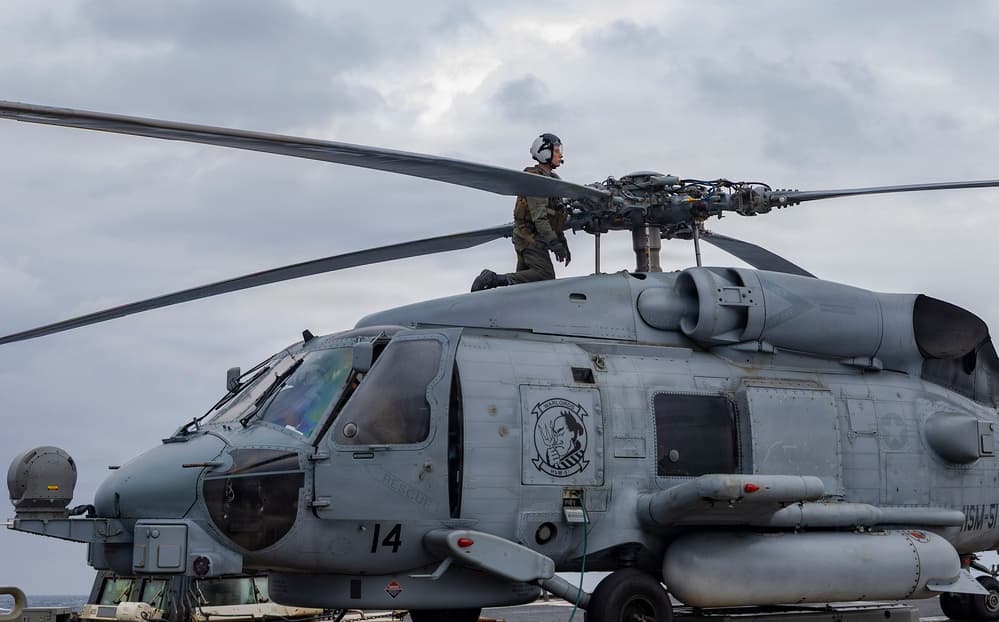
Naval Aircrewman
Naval Aircrewmen operate airborne electronic sensors, weapons systems, and communications equipment during flight. Multiple specialties: helicopter, patrol, and carrier-based.
Overall
Quick Stats
Security Clearance
Secret~$3K–$15K civilian sector value
Requires a National Agency Check with Local Agency Check and Credit Check (NACLC). Processing typically takes 1–3 months and is initiated early in your training pipeline.
ASVAB Requirements
Who This Is Best For
Best for adventurous individuals who want flight pay, travel, and a rating where no two days are the same. Multiple specialties let you choose between helicopters, patrol aircraft, and carrier-based platforms. If you want to actually fly rather than just work on aircraft, this is one of the most exciting rates available — ideal for those who crave variety and mission diversity.
+Pros
- ✓Active enlistment bonus available
- ✓Strong civilian career transition
–Cons
Real Opinions
+Positive
“Best rate in the Navy hands down. You actually fly and get flight pay. The missions are exciting and every day is different.”
“Being an aircrewman gave me experiences most people only dream about. SAR missions, anti-submarine warfare, seeing the world from the air.”
“The pipeline is tough and not everyone makes it, but if you do the reward is an incredible career flying in Navy aircraft.”
“Flying is amazing. Aircrew life has its downsides but nothing beats looking out the window on a mission.”
–Critical & Mixed
“The schedule is unpredictable. You could be gone for weeks with little notice. Hard on relationships.”
“The aircrew pipeline washes out a significant percentage of candidates, and if you fail, you get reclassified to a rate you didn't choose — often needs of the Navy. The NACCS training is physically and mentally demanding. Not everyone who wants to be aircrew makes it, and the fallback options are not great.”
“The biggest misconception about aircrew life is that you're always flying. In reality, you spend far more time on the ground doing maintenance, qualifications, training, and administrative duties. Actual flight hours are a small fraction of your work week. The gap between expectation and reality disappoints some people.”
Recruiter vs Reality
What the recruiter says vs. what it's actually like.
🫡 Recruiter says
“You will fly in Navy aircraft and see the world from above!”
💀 Reality
Source: MyNavyRates researchYou do fly, but much of your time is spent on ground maintenance, pre-flight checks, and qualifications. Flight schedules can be unpredictable and hard on family life.
🫡 Recruiter says
“AW gets flight pay.”
💀 Reality
Source: sailor forumsTrue, AW receives hazardous duty incentive pay for flying. But you also face flight physicals, swim qualifications, water survival training, and the risk inherent in military aviation.
🫡 Recruiter says
“Aircrewmen fly on Navy aircraft.”
💀 Reality
Source: veteran feedbackAW does fly, which is rare in the enlisted Navy. But the specific mission depends on your sub-rating (AWF, AWO, AWR, AWS, AWV). Some do tactical operations, others do sensor monitoring. All require passing a demanding aircrew training pipeline.
🫡 Recruiter says
“You'll fly on Navy aircraft every day — this is a flying job, not a desk job.”
💀 Reality
You will fly, but not every day. When not in the air, you do ground duties — aircraft maintenance, PQS qualifications, admin tasks, and PT. The flying-to-ground-work ratio varies by platform and deployment cycle.
🫡 Recruiter says
“It's a six-year program, but you get guaranteed flight duty and aviation incentive pay.”
💀 Reality
The six-year commitment is non-negotiable — the longest initial obligation in enlisted aviation. The training pipeline is 18-24 months before you reach your fleet squadron. That means 18-24 months of your six years are spent in training, not operational flying.
🫡 Recruiter says
“You could be a rescue swimmer, sensor operator, loadmaster, or aerial gunner — the options are incredible.”
💀 Reality
Your service rating (AWF, AWO, AWR, AWS, AWV) is assigned based on Navy needs, not your preference. You might want to be a rescue swimmer but end up as a sensor operator on a P-8. The recruiter sells all five — you get one.
🫡 Recruiter says
“Naval Aircrewmen undergo the most elite training in the Navy — you'll be among the best.”
💀 Reality
The training is genuinely demanding — NACCS includes water survival, low-pressure chamber runs, spatial disorientation training, and 6-mile runs. But "elite" creates an expectation gap — you are still an enlisted sailor doing maintenance, standing duty, and cleaning spaces.
🫡 Recruiter says
“Flying in the Navy is an experience most people only dream about.”
💀 Reality
The flying is genuinely unique and rewarding. But expect about 60% sea duty, frequent detachments even during shore tours, and a schedule that is incompatible with a predictable family life. Many AWs say it stresses relationships more than any other factor.
🫡 Recruiter says
“Your aviation experience will open doors to civilian pilot training and commercial aviation jobs.”
💀 Reality
Being an aircrewman does not help you become a pilot — completely different career tracks. Your transferable skills are in sensor operations, mission management, and systems operation. "Crewman" does not translate to "cockpit" in the civilian world.
Training Pipeline — Total ~17 weeks (4 months)
Ship Date Calculator
Enter your MEPS ship date to see when you'll complete each stage.
Promotion SpeedEarn higher pay fasterAverageManning 85% (undermanned)
| Cycle (Year) | Eligible | Selected | Promotion % |
|---|---|---|---|
| E-4252-Spring(2024) | 105 | 80 | 76% |
| E-4252-Fall(2024) | 193 | 110 | 57% |
| E-5252-Spring(2024) | 89 | 59 | 66% |
| E-5252-Fall(2024) | 168 | 33 | 20% |
| E-6252-Spring(2024) | 42 | 5 | 12% |
| E-6252-Fall(2024) | 141 | 10 | 7% |
Bonuses — Click here to see your military pay
Enlistment Bonus
Bonus by Contract Length
6-Year Contract
$12,000
5-Year Contract
$9,000
4-Year Contract
$6,000
How to Qualify
- Sign a contract for this rate at MEPS — bonus eligibility is locked at the time of contract signing
- Ship to boot camp and successfully complete Recruit Training Command (RTC) at Great Lakes, IL
- Complete A-School and any required follow-on training in the AW pipeline
- Receive your rate assignment and report to your first duty station
- Bonus is typically paid in installments — 50% after completing training, remainder in anniversary payments
Important Details
- •Longer contracts receive higher bonus amounts
- •Bonus amounts are subject to federal income tax withholding (typically 22%)
- •If you fail to complete training or are separated early, you may be required to repay a prorated portion
- •Bonus availability and amounts change frequently based on Navy manning needs — confirm with your recruiter
- •This rate requires a security clearance — failure to obtain clearance may affect bonus eligibility
You May Qualify for a Navy Enlisted Classification (NEC)
Specialties within this rate you can select, some with additional compensation. Each NEC has its own training, bonus potential, and career path.
Primary specialty code for Naval Aircrewman rating
Advanced specialty code for experienced Naval Aircrewman personnel
Potential Civilian Post-Navy Outcomes
Flight Operations Specialist
Transferability: 6/10
$45k–$70k
Free Certifications & Credentials
Certifications and licenses the Navy will pay for free through Navy COOL and on-the-job training.
CompTIA Security+
CompTIA
FAA Remote Pilot Certificate
FAA
Lifestyle6/10
Ship vs. Shore Split
40% / 60%
Deployment Frequency
High
Physical Demand
high — mixed
Watch Standing
Flight schedule dependent, rotating duty days
Watch standing is a 24-hour duty rotation where sailors take turns manning critical positions aboard the ship or at their command. The rotation determines how frequently you stand watch and how much rest time you get between shifts.
Watch qualifications vary by command and platform. Expect to qualify within 90 days of reporting.
Common Duty Stations
—
Schools + spouse jobs
—
Avg waitlist for on-base
95
100 = national avg
—
Schools + spouse jobs
—
Avg waitlist for on-base
135
100 = national avg
—
Schools + spouse jobs
—
Avg waitlist for on-base
92
100 = national avg