Aviation Ordnanceman
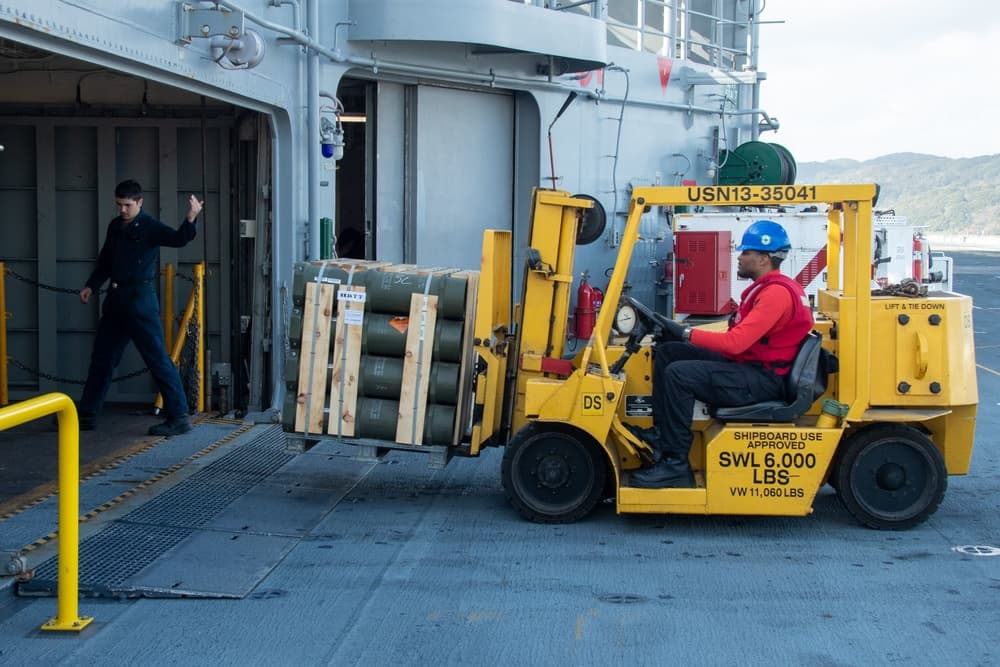
Assembles, tests, and loads weapons and ammunition on Navy aircraft.
Overall
Quick Stats
Security Clearance
Secret~$3K–$15K civilian sector value
Requires a National Agency Check with Local Agency Check and Credit Check (NACLC). Processing typically takes 1–3 months and is initiated early in your training pipeline.
ASVAB Requirements
Who This Is Best For
Best for physically strong team players who enjoy high-energy, hands-on work and don't mind heavy lifting. If you're drawn to weapons systems and want to be part of the combat punch, this rate delivers daily adrenaline with solid advancement. The work is physically taxing but deeply satisfying for the right personality.
+Pros
- ✓Strong civilian career transition
–Cons
- ✗Significant sea duty
Real Opinions
+Positive
“Tight-knit community, everyone looks out for each other. The camaraderie in the ordnance shop is unmatched.”
“I would recommend AO to anyone considering it. The training is solid and the community takes care of its own.”
“AOs take pride in being the ones who arm the aircraft. You handle everything from 20mm rounds to 2,000-pound bombs. The work is physically demanding but there is a genuine sense of mission when you see aircraft launch with ordnance you loaded. The weapons handling certifications have some civilian translation in logistics and hazmat.”
–Critical & Mixed
“Lots of travel with the Navy and great benefits in the long run, but middle managers are inconsistent and often incompetent.”
“AO work is physically demanding. You are carrying heavy ordnance in the heat on the flight deck. Not for the faint of heart.”
“Like any rate, AO has its downsides. Long hours, time away from family, and Navy bureaucracy are real.”
“AO is one of the most physically exhausting rates on a carrier. You're moving heavy ordnance in a flight deck environment that is loud, hot, and dangerous. The civilian career translation is limited — there aren't many jobs for bomb loaders on the outside. Most AOs end up in logistics, warehousing, or security work after the Navy.”
Recruiter vs Reality
What the recruiter says vs. what it's actually like.
🫡 Recruiter says
“The AO rate offers great training and career advancement opportunities!”
💀 Reality
Source: MyNavyRates researchTraining and advancement are available but vary by command and manning. Ask specific questions about sea/shore rotation, typical duty stations, and advancement rates for AO.
🫡 Recruiter says
“AO is one of the most dangerous jobs on the flight deck.”
💀 Reality
Source: sailor forumsFlight deck work is genuinely hazardous, but AO training is extensive and safety protocols are strict. The danger is real but managed through rigorous procedures.
🫡 Recruiter says
“Aviation Ordnancemen handle bombs and missiles.”
💀 Reality
Source: veteran feedbackAO does load and handle ordnance, but most of the job is weapons inventory management, magazine maintenance, and safety inspections. Live ordnance loading happens during exercises and deployments.
🫡 Recruiter says
“You'll work with bombs, missiles, and the most advanced weapons systems in the world.”
💀 Reality
The majority of your time is spent on inventory management, magazine sprinkler checks, weapons elevator maintenance, and moving heavy ordnance. The actual loading of live weapons happens in short, intense bursts. Most days are logistics and manual labor.
🫡 Recruiter says
“Ordnance work is exciting, fast-paced, and you're at the center of combat operations.”
💀 Reality
It is fast-paced when aircraft are launching, and seeing ordnance you built go downrange is genuinely rewarding. But one mistake with live ordnance can be catastrophic. The stress of handling explosives daily while exhausted on a 14-hour shift is not the kind of excitement the recruiter means.
🫡 Recruiter says
“Your weapons training will set you up for great civilian careers in defense and security.”
💀 Reality
This is the hardest civilian transfer in naval aviation. There are not many civilian jobs where you load Mk-83 bombs. Defense contractors hire experienced AOs as weapons SMEs, but those jobs go to senior E-6+ with specific platform experience. A first-term AO needs to lean on logistics, safety management, and inventory control skills.
🫡 Recruiter says
“AO is a tight-knit community — the ordnance team is like a family.”
💀 Reality
The red-shirt ordnance crew does build strong bonds because the work requires absolute trust. But AO is a sea-intensive rate — about 60% of a 20-year career is sea duty. More deployments, more time away from your actual family.
🫡 Recruiter says
“A-school is only 9 weeks and you'll be qualified to work with live ordnance.”
💀 Reality
A-school covers the basics, but you arrive at your first command needing extensive OJT and PQS qualifications before you touch anything live. The physical demands start immediately — ordnance components are heavy, and you will be lifting and moving them constantly.
🫡 Recruiter says
“You wear the red jersey on the flight deck — it's the most recognizable and respected job out there.”
💀 Reality
Red shirts are recognizable, but in some squadrons, ordnance is seen as the team that just loads weapons while the "real" maintainers fix the aircraft. Your job has zero margin for error with explosives, but you may have to prove your value constantly to leadership focused on aircraft readiness metrics.
Training Pipeline — Total ~14 weeks (3 months)
Ship Date Calculator
Enter your MEPS ship date to see when you'll complete each stage.
Promotion SpeedEarn higher pay fasterAverageManning 78% (E-5/E-6)
| Cycle (Year) | Eligible | Selected | Promotion % |
|---|---|---|---|
| E-4252-Spring(2024) | 106 | 64 | 60% |
| E-4252-Fall(2024) | 185 | 87 | 47% |
| E-5252-Spring(2024) | 92 | 42 | 46% |
| E-5252-Fall(2024) | 83 | 24 | 29% |
| E-6252-Spring(2024) | 144 | 43 | 30% |
| E-6252-Fall(2024) | 121 | 29 | 24% |
Bonuses — Click here to see your military pay
Enlistment Bonus
No active bonus for this rate
You May Qualify for a Navy Enlisted Classification (NEC)
Specialties within this rate you can select, some with additional compensation. Each NEC has its own training, bonus potential, and career path.
Primary specialty code for Aviation Ordnanceman rating
Advanced specialty code for experienced Aviation Ordnanceman personnel
Potential Civilian Post-Navy Outcomes
Munitions Handler
Transferability: 4/10
$35k–$52k
Lifestyle5/10
Ship vs. Shore Split
60% / 40%
Deployment Frequency
High
Physical Demand
high — mixed
Watch Standing
Flight schedule dependent, rotating duty days
Watch standing is a 24-hour duty rotation where sailors take turns manning critical positions aboard the ship or at their command. The rotation determines how frequently you stand watch and how much rest time you get between shifts.
Watch qualifications vary by command and platform. Expect to qualify within 90 days of reporting.
Common Duty Stations
—
Schools + spouse jobs
—
Avg waitlist for on-base
95
100 = national avg
—
Schools + spouse jobs
—
Avg waitlist for on-base
135
100 = national avg
—
Schools + spouse jobs
—
Avg waitlist for on-base
92
100 = national avg