Airman
Undesignated airman apprentice working in aviation-related divisions while awaiting rating assignment.
Overall
Quick Stats
Security Clearance
None
This rate does not require a security clearance.
ASVAB Requirements
No ASVAB data available
Who This Is Best For
Best for undecided individuals who know they want aviation but need hands-on exposure before choosing a specialty. The trade-off is slower advancement until you strike a rate, but you gain broad visibility into multiple career paths before committing. Ideal if you're uncertain but motivated.
+Pros
- ✓Strong civilian career transition
–Cons
Real Opinions
+Positive
“I would recommend AN to anyone considering it. The training is solid and the community takes care of its own.”
“The PACT Airman program gave me a chance to see multiple aviation shops before choosing my rate. I got exposure to avionics, power plants, and airframes before deciding. That firsthand experience was invaluable — I picked a rate I actually enjoy instead of guessing from a pamphlet.”
“Some undesignated airmen find the experience builds resilience and appreciation for whatever rate they eventually strike. The aviation community has a faster strike timeline than deck or engineering — most airmen can pick their rate within 12 months if they stay qualified.”
–Critical & Mixed
“Being undesignated means you do whatever needs doing. You have little control over your day-to-day until you strike a rate.”
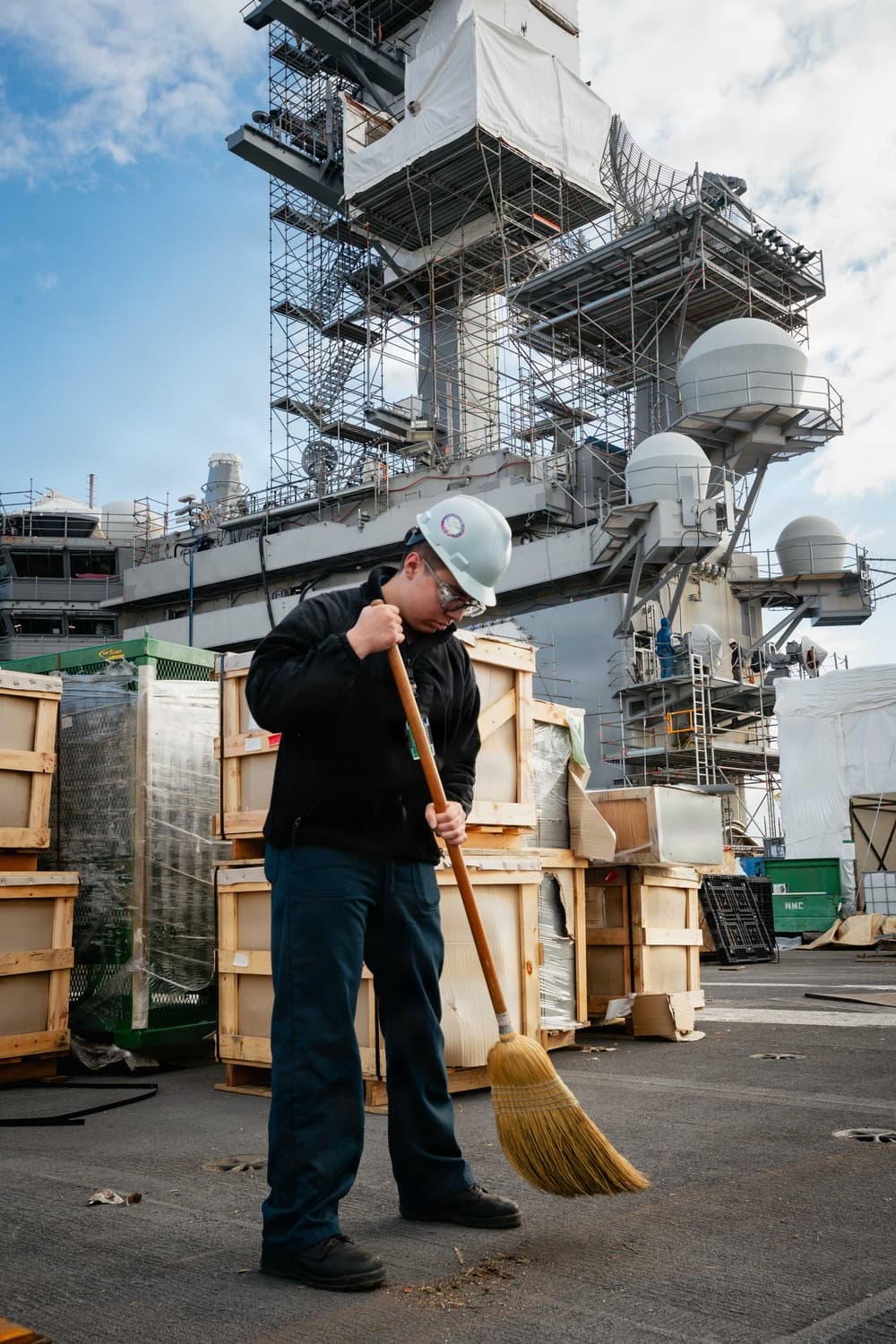
“Going undes airman means you're basically the flight deck's extra pair of hands. You'll be chocking and chaining aircraft, sweeping the flight deck for FOD, and doing whatever grunt work the aviation department needs. It's physically exhausting and you have no guaranteed career path until you strike.”
“The aviation community moves fast and the environment is unforgiving. As an undesignated airman, you're doing the hardest physical labor with the least recognition. If your desired rate doesn't have open quotas when you're eligible to strike, you're stuck waiting while doing FOD walkdowns.”
Recruiter vs Reality
What the recruiter says vs. what it's actually like.
🫡 Recruiter says
“Going undesignated lets you try different jobs before committing to one!”
💀 Reality
Source: MyNavyRates researchBeing undesignated means you will likely do the jobs nobody else wants until you strike a rate. You have less control over your career path and may wait months to get into A-school.
🫡 Recruiter says
“Airman is better than Seaman because aviation has better quality of life.”
💀 Reality
Source: veteran feedbackAviation commands can have better facilities, but as an undesignated AN you do not enjoy the same benefits as rated aviation sailors. You are still doing manual labor, just in a hangar instead of on deck.
🫡 Recruiter says
“AN is great because you are already in an aviation squadron.”
💀 Reality
Source: reddit r/newtothenavyBeing in a squadron as undesignated means you see what the rated sailors do, but you are doing the grunt work while they do the technical jobs. It can be motivating or demoralizing depending on your perspective.
🫡 Recruiter says
“AN can strike for any aviation rate.”
💀 Reality
Source: sailor forumsOnly aviation community rates, and only if there are open billets. The popular rates like AW and AT fill quickly. You may end up striking for a rate that was not your first choice simply because it was available.
🫡 Recruiter says
“Going Airman lets you work around aircraft.”
💀 Reality
Source: veteran feedbackAN is assigned to aviation intermediate maintenance or the flight deck doing general labor. You are not maintaining aircraft as an AN. You are sweeping hangars, moving parts, and doing whatever the shop needs.
🫡 Recruiter says
“As an Airman, you'll work with aircraft and learn about aviation maintenance.”
💀 Reality
You'll mostly be sweeping hangar bays, moving toolboxes, and holding flashlights for the rated technicians. You're adjacent to aviation, not doing aviation.
🫡 Recruiter says
“You'll get to try different aviation jobs and pick the one you like best.”
💀 Reality
Striking for a rate depends on what's available, not what you want. Many PACT Airmen end up striking for whatever has openings, and some can't strike at all before their first enlistment ends.
Training Pipeline — Total ~8 weeks (2 months)
Ship Date Calculator
Enter your MEPS ship date to see when you'll complete each stage.
Promotion SpeedEarn higher pay faster—Manning 99% (E-5/E-6)
| Cycle (Year) | Eligible | Selected | Promotion % |
|---|---|---|---|
| E-4252-Spring(2024) | 77 | 100 | 130% |
| E-4252-Fall(2024) | 59 | 55 | 93% |
| E-5252-Spring(2024) | 42 | 37 | 88% |
| E-5252-Fall(2024) | 73 | 25 | 34% |
| E-6252-Spring(2024) | 138 | 24 | 17% |
| E-6252-Fall(2024) | 30 | 35 | 117% |
Bonuses — Click here to see your military pay
Enlistment Bonus
No active bonus for this rate
Potential Civilian Post-Navy Outcomes
Aviation Ground Crew
Transferability: 3/10
$28k–$42k
Lifestyle4/10
Ship vs. Shore Split
50% / 50%
Deployment Frequency
Moderate
Physical Demand
medium — mixed
Watch Standing
Assigned to division watch bill (varies by command)
Watch standing is a 24-hour duty rotation where sailors take turns manning critical positions aboard the ship or at their command. The rotation determines how frequently you stand watch and how much rest time you get between shifts.
Watch qualifications vary by command and platform. Expect to qualify within 90 days of reporting.