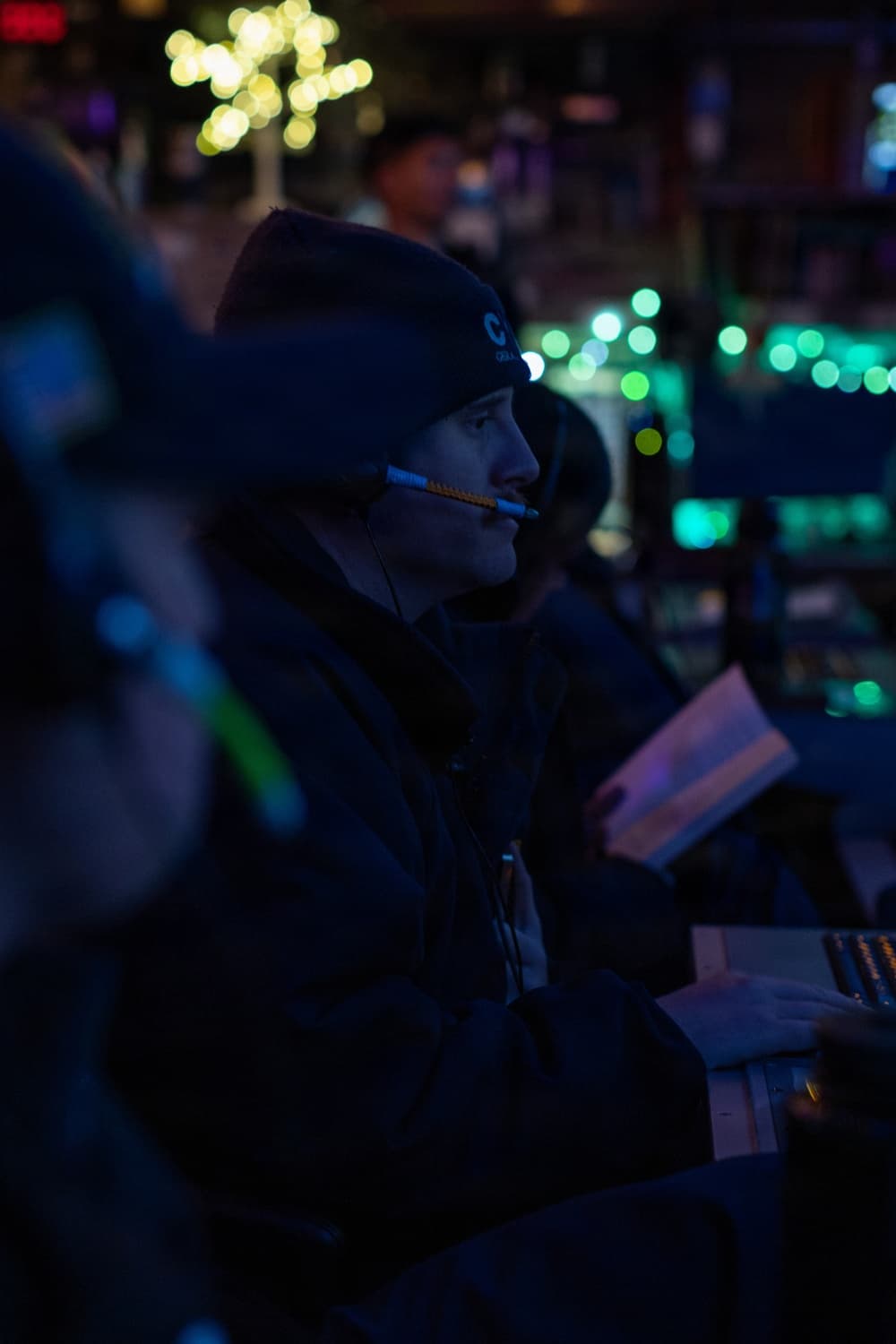
Air Traffic Controller
Controls aircraft movement in and around Navy airfields and aboard carriers.
Overall
Quick Stats
Security Clearance
Secret~$3K–$15K civilian sector value
Requires a National Agency Check with Local Agency Check and Credit Check (NACLC). Processing typically takes 1–3 months and is initiated early in your training pipeline.
ASVAB Requirements
Who This Is Best For
Best for calm, focused multitaskers with strong spatial awareness who want one of the most direct military-to-civilian career pipelines in the Navy. FAA controllers earn $100K+ and actively recruit former military ACs, making this one of the highest civilian salary ceilings available. The trade-off is intense pressure with zero margin for error — not for everyone, but exceptionally rewarding for those with the temperament.
+Pros
- ✓Strong civilian career transition
–Cons
Real Opinions
+Positive
“The FAA certification you earn is the single most valuable credential in the Navy. ACs who get out walk into six-figure civilian ATC jobs.”
“Great rate if you can handle the pressure. The training pipeline washes out a lot of people but those who make it have an incredible career path.”
“I would recommend AC to anyone considering it. The training is solid and the community takes care of its own.”
–Critical & Mixed
“The stress is real. You are responsible for the safety of every aircraft in your airspace. One mistake can cost lives.”
“Like any rate, AC has its downsides. Long hours, time away from family, and Navy bureaucracy are real.”
“Navy Air Traffic Control is high-stress, high-consequence work — a mistake can cost lives. The training is excellent and translates directly to FAA civilian ATC careers paying $100K+, but the pressure never lets up. Shipboard ATC is particularly intense with rolling decks, bad weather, and compressed approach patterns. Burnout is real.”
Recruiter vs Reality
What the recruiter says vs. what it's actually like.
🫡 Recruiter says
“The AC rate offers great training and career advancement opportunities!”
💀 Reality
Source: MyNavyRates researchTraining and advancement are available but vary by command and manning. Ask specific questions about sea/shore rotation, typical duty stations, and advancement rates for AC.
🫡 Recruiter says
“Air Traffic Control in the Navy leads directly to FAA jobs.”
💀 Reality
Source: veteran feedbackNavy ATC experience is valuable but the FAA has its own hiring process, age requirements (must apply before 31), and academy. Your military experience gives you preference but not a guaranteed job.
🫡 Recruiter says
“AC is one of the highest-paid ratings.”
💀 Reality
Source: sailor forumsAC pay is the same as every other rating at the same rank. The civilian ATC career pays well, but you have to successfully transition through the FAA process first.
🫡 Recruiter says
“AC has a great quality of life.”
💀 Reality
Source: reddit r/navyAC can be stationed at air stations with good hours, but the work is high-stress with zero tolerance for errors. A single mistake can cost lives. The stress follows you home.
🫡 Recruiter says
“You'll walk right into a six-figure FAA job when you get out — military ATC transfers directly.”
💀 Reality
Navy ATC experience on a carrier (CATCC) is not considered qualifying ATC experience by the FAA. You need to be stationed at a Naval Air Station (land base) and work a RATCF or tower to get FAA-creditable time. Carrier-only ACs often have to start the FAA hiring process from scratch.
🫡 Recruiter says
“It's like being an air traffic controller at a civilian airport but cooler — you're controlling fighter jets.”
💀 Reality
A-school in Pensacola is 20+ weeks of academics with one of the highest washout rates in the Navy. If you fail, you get rerated to whatever the Navy needs, and you have zero say in it.
🫡 Recruiter says
“You'll spend most of your career at nice shore stations since ATC is land-based.”
💀 Reality
About 70% of your career is shore duty, which is genuinely good. But your shore stations are limited to places with airfields — mostly Pensacola, Virginia Beach, Jacksonville, Lemoore, and a handful of others.
🫡 Recruiter says
“The work environment is clean and comfortable — you're working indoors in an air-conditioned tower.”
💀 Reality
The environment is clean, but the stress is relentless. You are personally responsible for aircraft separation — a mistake can kill people. Shift work is 24/7, including nights, weekends, and holidays. Burnout and anxiety are real occupational hazards.
🫡 Recruiter says
“You'll be controlling the most advanced military aircraft in the world from day one.”
💀 Reality
After A-school you still need to qualify at your facility, which can take 6-12 months of supervised on-the-job training. Until you're fully qualified, you're essentially a trainee.
🫡 Recruiter says
“It's a small, tight-knit community with great advancement.”
💀 Reality
The AC community is small, which cuts both ways. Advancement to E-5 and E-6 can be competitive because there are fewer billets. And everyone knows your business — your reputation follows you from command to command.
Training Pipeline — Total ~23 weeks (5 months)
Ship Date Calculator
Enter your MEPS ship date to see when you'll complete each stage.
Promotion SpeedEarn higher pay fasterSlowManning 83% (E-4/E-5)
| Cycle (Year) | Eligible | Selected | Promotion % |
|---|---|---|---|
| E-4252-Spring(2024) | 175 | 66 | 38% |
| E-4252-Fall(2024) | 214 | 104 | 49% |
| E-5252-Spring(2024) | 76 | 31 | 41% |
| E-5252-Fall(2024) | 115 | 51 | 44% |
| E-6252-Spring(2024) | 68 | 31 | 46% |
| E-6252-Fall(2024) | 51 | 27 | 53% |
Bonuses — Click here to see your military pay
Enlistment Bonus
No active bonus for this rate
You May Qualify for a Navy Enlisted Classification (NEC)
Specialties within this rate you can select, some with additional compensation. Each NEC has its own training, bonus potential, and career path.
Primary specialty code for Air Traffic Controller rating
Advanced specialty code for experienced Air Traffic Controller personnel
Potential Civilian Post-Navy Outcomes
Air Traffic Controller
Transferability: 10/10
$70k–$130k
Lifestyle6/10
Ship vs. Shore Split
50% / 50%
Deployment Frequency
Moderate
Physical Demand
low — indoor
Watch Standing
Flight schedule dependent, rotating duty days
Watch standing is a 24-hour duty rotation where sailors take turns manning critical positions aboard the ship or at their command. The rotation determines how frequently you stand watch and how much rest time you get between shifts.
Watch qualifications vary by command and platform. Expect to qualify within 90 days of reporting.
Common Duty Stations
—
Schools + spouse jobs
—
Avg waitlist for on-base
95
100 = national avg
—
Schools + spouse jobs
—
Avg waitlist for on-base
135
100 = national avg
—
Schools + spouse jobs
—
Avg waitlist for on-base
92
100 = national avg